
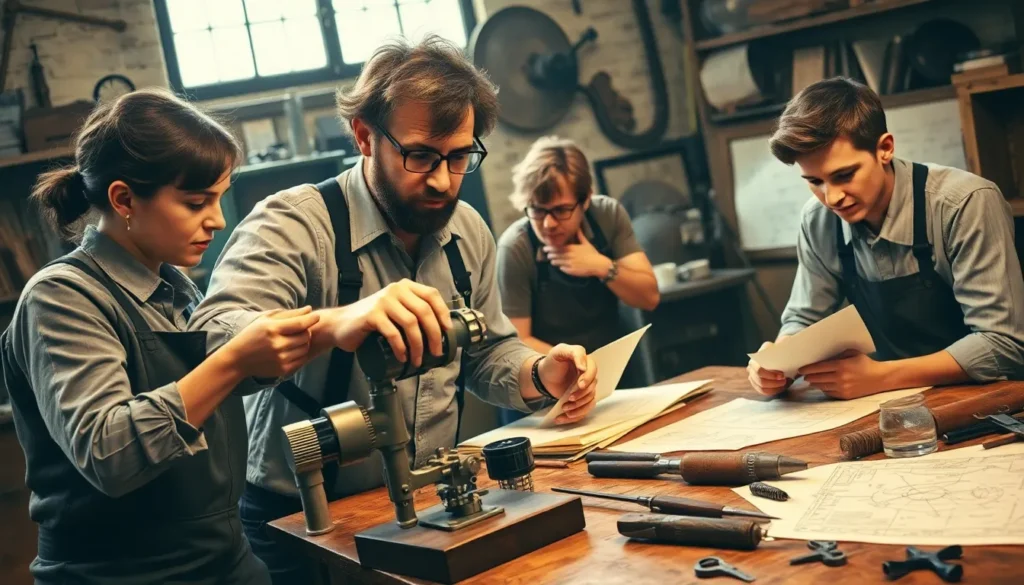
Every great invention has a story, but have you ever wondered about the year it all began? Picture this: a world buzzing with creativity, where brilliant minds transformed wild ideas into groundbreaking inventions. From the wheel to the smartphone, each creation has a pivotal moment in time that sparked its existence.
Overview Of The Invention
Every invention carries a distinct narrative that underscores its historical context. The transformative effects of these creations often resonate through time.
Significance In History
Inventions shape societies and influence cultural progress. The invention of the printing press in 1440, for instance, revolutionized communication by enabling mass production of books. This accessibility fostered literacy and the spread of ideas across Europe, significantly impacting the Renaissance. Similarly, the steam engine emerged in the 18th century, catalyzing the Industrial Revolution and altering industries forever. Each invention has played a critical role, highlighting humanity’s adaptability and creativity in solving problems.
Key Figures Involved
Inventors often serve as the driving force behind innovation. Johannes Gutenberg’s creation of the printing press exemplifies a pivotal moment in history. Alexander Graham Bell, credited with inventing the telephone in 1876, transformed communication by connecting people over great distances. Moreover, Thomas Edison’s prolific contributions, including the electric light bulb, greatly influenced daily life. These individuals showcase the relentless pursuit of knowledge and the impact of innovative thinking on society.
Major Innovations

Innovations throughout history embody creativity and problem-solving. Each development demonstrates how technology evolves in response to human needs.
Technology Evolution
In 1440, Johannes Gutenberg introduced the printing press, transforming the way information spread. The telegraph followed in 1837, allowing instant communication across distances. In 1876, Alexander Graham Bell’s telephone revolutionized voice communication, making it accessible. The launch of automobiles in the early 20th century improved transportation efficiency. Each invention contributed to an interconnected world, paving the way for modern advancements like the internet and smartphones.
Impact On Society
Inventions significantly reshape societies by altering how individuals interact. The printing press increased literacy rates, fostering an informed public. Telegraphs connected regions, enabling commerce and political collaboration. With the telephone, communication barriers fell, enhancing personal and professional relationships. The automobile’s prevalence reshaped urban development, altering lifestyles and social structures. Each technological leap leaves a lasting impression, reflecting the relentless progression of civilization.
Cultural Reactions
Cultural reactions to inventions significantly shape their acceptance and integration into society.
Public Reception
Initial responses typically range from excitement to skepticism. Many people embraced innovations for their potential to improve daily life. For instance, the telephone garnered enthusiasm as it promised instant communication. Others feared it could disrupt traditional social interactions. Over time, widespread adoption often occurred, leading to a deeper appreciation for technological advancements. Surveys reflected public sentiment, revealing a growing acceptance as users experienced practical benefits.
Critiques And Controversies
Critiques frequently accompany groundbreaking inventions. Some individuals express concern over potential negative impacts, including job displacement and privacy issues. The introduction of the internet sparked debates regarding information accessibility versus misinformation spread. Controversies often arise surrounding ethical implications and societal shifts invoked by these innovations. Different perspectives highlight varying worries, fueling ongoing discussions about responsible technology use. Innovations challenge norms, prompting critical reflections on their role in shaping future cultural landscapes.
Lasting Influence
Inventions resonate through history, leaving a profound influence on society. Each significant creation transforms daily life and often shapes future innovations.
Legacy In Modern Times
Innovations from the past continue to impact modern technology and culture. The printing press initiated a wave of literacy that remains essential for education today. Telephones paved the way for instant communication, allowing people to connect globally. Automobiles revolutionized transportation, influencing urban design and infrastructure. Each legacy item reflects positive change while revealing ongoing advancements in how society interacts and operates.
Future Prospects
Looking forward, inventions promise to shape the future in remarkable ways. Emerging technologies like artificial intelligence and renewable energy will influence industries and communities. Innovations in biomedicine might alter healthcare, improving quality and accessibility. Sustainability-focused inventions are crucial for addressing climate challenges through efficient resources. Each prospect offers potential solutions to contemporary issues, fostering a future guided by creativity and necessity.
The journey of invention is a testament to human ingenuity and resilience. Each innovation not only marks a specific moment in time but also reflects the collective aspirations and challenges faced by society. As history reveals, these creations have the power to redefine how people live and interact.
Looking to the future, the spirit of innovation remains alive. Emerging technologies promise to address pressing global issues while continuing to shape cultural landscapes. The legacy of past inventions serves as a foundation for new breakthroughs, ensuring that creativity and problem-solving will always be at the forefront of human progress.